June 20, 2017
“But Ari,” I asked with hesitation evident in my voice, “how can we lead an all girls group?” I was incredibly scared of how to handle the tougher questions associated with life as a woman in Mozambique. I doubted my competence to give advice or empathize with the concerns my female students would have. These fears were dissuading me from even considering this as a potential project.
Fast-forward a couple of weeks to a conversation on gender equality between some young men from around town and me. “Tio John, we always have to keep our work and home lives separate. If our boss stresses us out, we can’t bring that home with us. But, after a long day, if our wives frustrate us, we can’t control ourselves,” they said.
“So, when your boss frustrates you, you don’t hit him. But, when your wife frustrates you, you can hit her. Why?” was my response. (Also, credit for this question goes to my buddy Chris.)
“Tio John, you’re not understanding well. We don’t mix our work lives and our home lives.”
“Right. But, why are you allowed to hit your wife but not your boss?”
“Because our boss is in our work life and our wife is in our home life. Those lives are different.”
“But, why can you treat these two stressors differently? Why are these two different interactions?”
“Tio John, you aren’t understanding. We don’t mix our work and home lives.”
I was at a loss for words when my questioning couldn’t bring about any perspective shift in those students. I couldn’t believe that I had to directly explain that I thought the reason they wouldn’t hit their boss was because he was a superior; he was seated in a place of power. Contrarily, they viewed their wives, Mozambican women, as inferior making them think their actions were justifiable. This circular conversation demonstrates how deeply rooted in Mozambican society gender inequality can potentially be.
I’m not writing this post to shame Mozambican men. Not all of them share these views. Undoubtedly, there is a wide range of beliefs and opinions on this topic from both men and women, both Mozambican and American. From my experiences thus far, I wanted to write this post to raise awareness to some of the gender inequality Mozambican women face. Women here are up against a society that has traditionally valued and continues to value males over females. Women have to work much harder to have a voice in this male-dominated environment. Peace Corps volunteers of yore recognized this too and started a girls’ empowerment project known as REDES. Raparigas Em Desenvolvimento, Educação, e Saúde- Girls in Development, Education, and Health. Luckily, Ari went to a training on how to create a REDES group and started one in Pebane despite my reluctance to devote time to this cause.
During our first REDES meeting in Pebane, one girl confided in the group that she was living alone. Her parents tried to force her to get married at a young age, but she wanted to continue her studies. Her parents wouldn’t have that, so she had to leave home to do what she thought best for her future. Now, as a 16 year old, she completely supports herself while continuing her education as a high school 9th grader. If this doesn’t scream that the Mozambican woman is strong, then I don’t know what will.
The grit and perseverance of the Mozambican woman pervades into the everyday lives of my students. I have so many female students who take care of their families, carry water from the well, work on the farm, clean the house, cook all the meals, along with a whole bunch of other responsibilities, and, then, they come to school. (The kicker is that they do all of these things with a baby cradled in capulana strapped on their backs.)
Coincidentally, the Portuguese word “redes” also means net. An interwoven connection of thread whose strength relies on the ties to its neighbors, A net’s power is derived from the unity of the whole. It’s important for these girls to hear these stories of strong Mozambican women. They need a safe place to share their struggles and successes, a place to strengthen their ties to one another. REDES can give a platform for these stories to be heard, bring these students together and build them up.
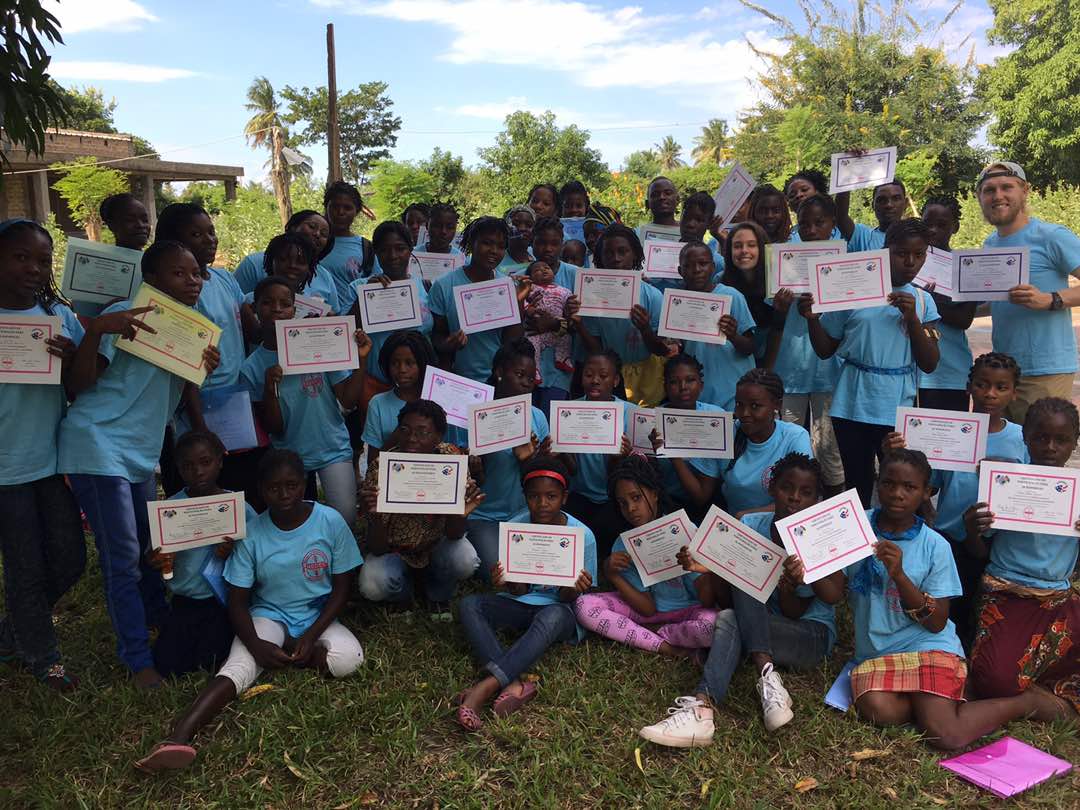
I recently participated as an HIV facilitator at the Zambézia provincial REDES workshop where more than 60 girls ranging in age from 10-20 years old gathered to share experiences. Though, admittedly, I have never attended an all girls slumber party, I imagine this conference acted as breeding grounds for the largest one Zambezia has ever seen. There was dancing, making friendship bracelets, staying up late, playing games, singing songs, and confiding in friends both old and new. Beyond having fun, these girls were educated on topics such as HIV/AIDS, puberty, women’s rights, healthy relationships, self esteem, women’s health, communication strategies, educational opportunities, and professional opportunities. I saw brilliant, creative, and strong young women from all over Zambézia speak up at this conference. I saw young women ready to take on the world, ready to fight for their futures. I saw young women equipped to pursue their dreams of being Mozambique’s (and the world’s) next physicians, teachers, and businesswomen. I experienced yet again that the Mozambican woman is powerful. And when that power is harnessed, she can bring so much positive change to her community. She deserves a fair chance, an equal chance.
“If not us, then who?” Looking back, that is the question I should have asked myself in my initial conversation with Ari. “Who is going to give a platform for these women to tell their stories? For these women to be heard? Who is going to speak up for their rights? Who is going to work to create opportunities for these girls to advance themselves? Who is going to tell them they can be more than their current circumstances? I believe this responsibility to empower our fellow human being lies within each of us. So I ask again, ‘If not us, John, then who?’”
P.S. This conference included 3 nutritious meals a day, cost of transportation to and from the conference, lodging for 3 nights, a conference T-shirt, and all the materials that the girls needed for the conference. All of this together cost a measly $13 per girl. Crazy right?
P.P.S. I recognize that a single 3-day conference probably won’t solve all of the problems these girls are facing, nor am I naïve enough to say that this change will happen rapidly or efficiently. But, I feel an overwhelming compulsion to do something. This personal call to arms was my main motivator for this post.
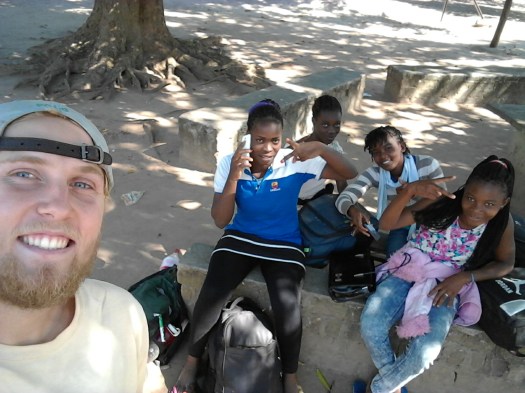
Pebane representing on Day 1 of the conference. We were the first to arrive!
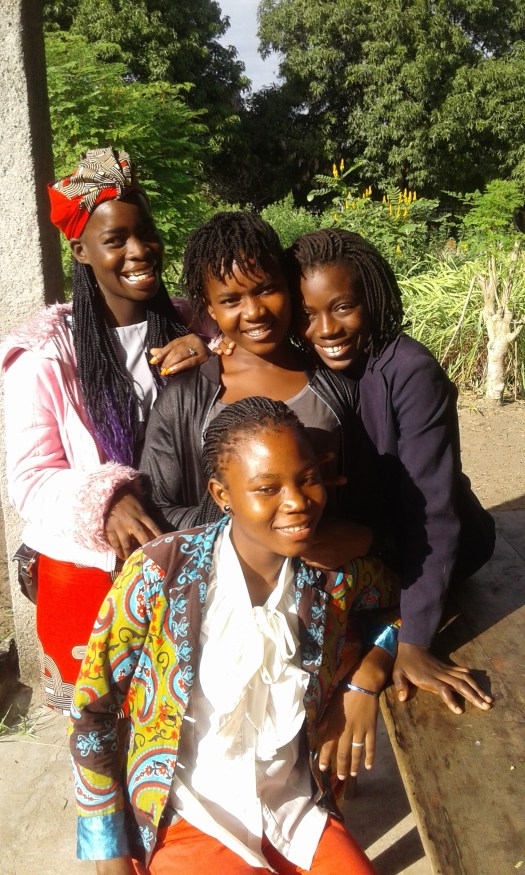
Pebane Girls take on Day 2!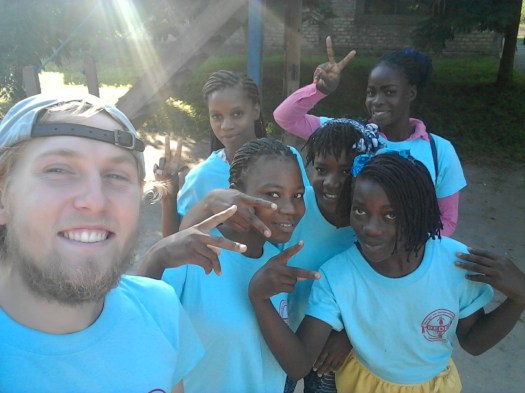
Taking on Day 3.
After we got our certificates!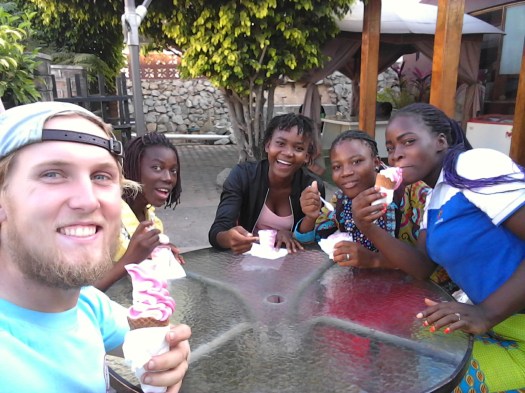
We don’t get to go to the city often, but when we do, ice cream is a must!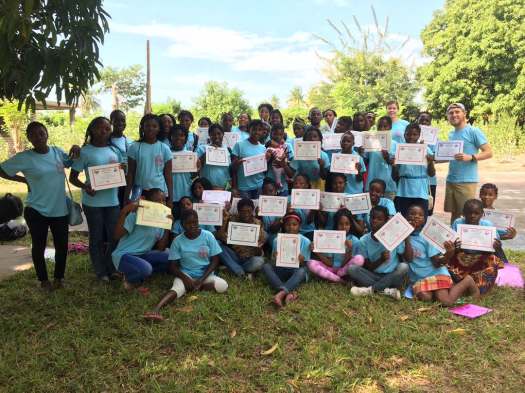
Group picture of all of the girls there!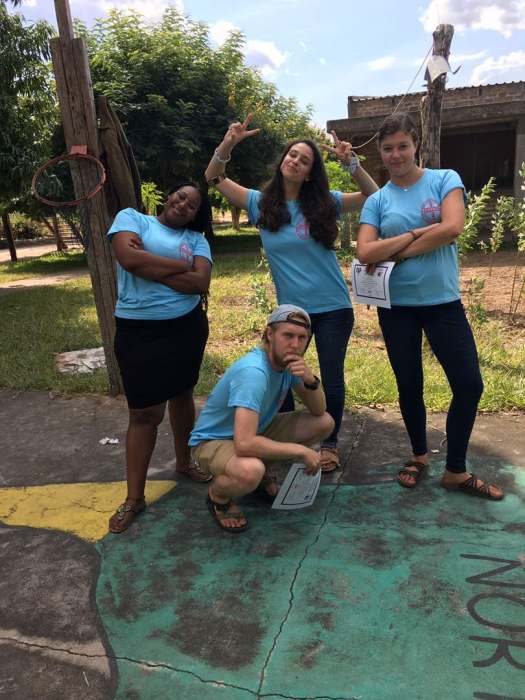
Only the coolest REDES PCV’s that Zambezia has ever seen! (Well part of them at least)
 MOZ likely to sunburn
*cue tears and swelling heart*
LikeLike