March 4, 2018
If you ask anyone from the surrounding areas, Pebane has a reputation of being lazy and unmotivated. People from all over Zambezia province believe the beach drains the volition out of the eMoniga (the people of Pebane) rendering them unwilling to work hard. If you ask me, I think these people have never met Lasmim Pilecas; if they had, I’m sure their story would change to accommodate their new data point.
Lasmim Pilecas is a little over 6 feet tall. He always dresses in pleated, dress pants, a long sleeved, collar shirt, and a skinny tie that matches his thin bone structure. His voice is deep, a resounding bass. At the front of his 12th grade philosophy classroom, Pilecas is articulate. Thoughtful. Elegant. My host brother was a student of his last year. He told me that, while Pilecas is known to demand respect and refuse students who did not meet dress code entrance into his class, he also has an array of interactive songs to help the kids grasp philosophy better. In other words, Senhor Professor Pilecas seemed to be a perfect blend of the traits required to be an effective teacher.
While he excels at his job at the secondary school, my favorite part of Pilecas is his explosion of energy when he sees a small child trying to learn. He sheds his pensive, philosopher persona for a gregarious, goofy, and easygoing pre-school teacher. He laughs, sings, dances (in a cacophony of flailing arm movements, might I add), jokes, and overflows with positive energy that is sure to trigger a smile on anyone’s face. It is evident that Pilecas has a passion for working with kids and a love for early childhood education.
When I arrived in December 2016, Pilecas had already identified a lack of early childhood opportunities and began the process of providing a way to meet that need here in Pebane. Earlier that year, he submitted an application to the Mozambican Ministry of Education and was approved to open Pebane’s first Escolinha (Pre-school). He single-handedly selected and organized a team of volunteers to begin work with an inaugural class of about 20 children while all the paperwork was still being processed. (i.e. he and all of the other volunteers were doing all of this work pro bono. Also, this is where I come in.) For the first few months, the Escolinha ran smoothly. There were alphabet lessons, coloring times, basic math instruction, play time, and so much more. As the director, Pilecas continually improved upon the functionality of the escolinha by finding local resources such as a teacher’s desk, a chalkboard, a book bag rack, students’ desks, and some shelving.
Around April 2017, all of Moz27 Peace Corps Volunteers received an email with the application for O Programa Biblioteca Comunitária – Community Library Program. Seeing the opportunity to bring more children’s books into the community and further develop early child education, Pilecas, Ari, and I applied and were accepted to this program thinking we would use the Escolinha as our base. (Side note: this program is sponsored by both Peace Corps and World Education.)
Pilecas and I went to a weeklong intensive training in June 2017 on how to run a community library. We learned logistics: keeping inventory, applying for additional grants, monitoring and evaluating the program, planning and executing facilitator trainings. We learned curriculum: best practices for early childhood education, literacy activities without resources, songs, dances. We received a lot of useful information and creative ideas on how to capitalize on what resources Mozambique has to offer.
At the end of the week, we had to develop a strategy of implementation for the program in our town. Let me give you the relevant details for forming this plan. First off, Pebane is fortunate to already have a Community Library building (constructed by ActionAid in the 90s) with a librarian paid by the district board of education. Pebane is more or less a single dirt road spanning about 3 miles from east to west. Off of the main road are much smaller paths leading into the neighborhoods. The majority of these neighborhoods, more specifically the kids of these neighborhoods, range from at least a 20-minute walk up to about an hour walk from the library. While we did not have to tackle the problem of creating a space to store our resources, we did have to figure out how to deliver this program to kids that would not be able to benefit from the program due to proximity and accessibility issues. To address this issue, we decided to have a central meeting location in each neighborhood to serve the children of that neighborhood. What we needed now was man(and woman)power.
Over the next 3 months after returning to Pebane, we set up meetings with the Director of District Education in Pebane, in order to have her recommend some primary school educators from the different neighborhoods that would be a good fit for our program, as well as meetings with the chefes do bairro – neighborhood presidents – in each neighborhood to talk to them about our program’s goals and ask for their help in procuring a space for the program. All of the neighborhood presidents and the director of education were happy to oblige and were extremely helpful.
After receiving this list of instructors and getting community by in, Pilecas and I began planning our first training for the facilitators to be held at the end of October 2017. It was a one-day, condensed version of our weeklong training. We had 16 facilitators attend. (Which was AHHHHMAZING!) (Also, this was the training mentioned in “It’s not ideal”)
The week after, we began the program in 5 neighborhoods. Over the month of November 2017, we consistently had over 100 kids and 10 facilitators show up across the 5 neighborhoods. The student to teacher ratio was on average 13:1 which is significantly smaller than the current average in primary schools which frequently exceeds 100:1. Given a few minor hiccups and setbacks, the facilitators had nothing but positive feedback about their experiences.
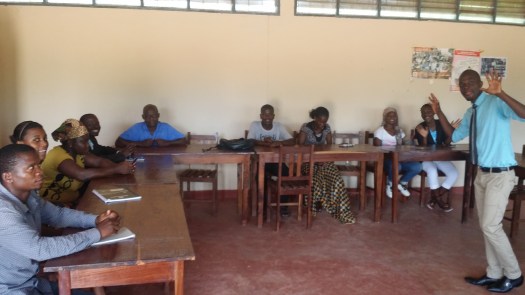
December 2017 marks a 3-month summer break for Mozambican schools which was reflected in our program’s attendance. But, have no fear. Last week on March 3, 2018, we had another small training to invite 4 new members to join our team, all of which had been recruited by last-year’s facilitators that had loved the program. With the exception of one session, this entire training was self run by our facilitators who led literacy demonstrations, shared advice, taught their favorite songs and dances, and offered their experiences to one another on how to better facilitate each meeting. In other words, this team of facilitators is self-motivated and passionate about this program, and, because of their hard work, they are improving life in Pebane.
To say that I am proud of Pilecas and his grit is an understatement. To say that I am proud of this team and their passion doesn’t even begin to give them the proper recognition that they deserve. To say that I was the spark that started the project would unjustly credit too much of the responsibility to my record. Honestly, I think I was just the connection that brought together this team with the resources that Peace Corps and World Education so generously offer. What I can say is that I am so excited that this program is becoming self-sustaining and that I get the blessing of being here another year to watch it grow and mature.
I think the rest of Zambezia province, Mozambique, and even the world could learn a thing or two from Pilecas and my Community Library team: motivated, humble Pebane residents.
P.S. The program will start back in full force this Saturday, March 10, 2018.
P.P.S. Thank you for bearing with all of the details of getting this project off of the ground. I really just wanted to show you how amazing this team is and how happy I am of all of their hard work!
P.P.P.S. They have more cool ideas for the library program in the works and I will keep y’all updated as these ideas progress!
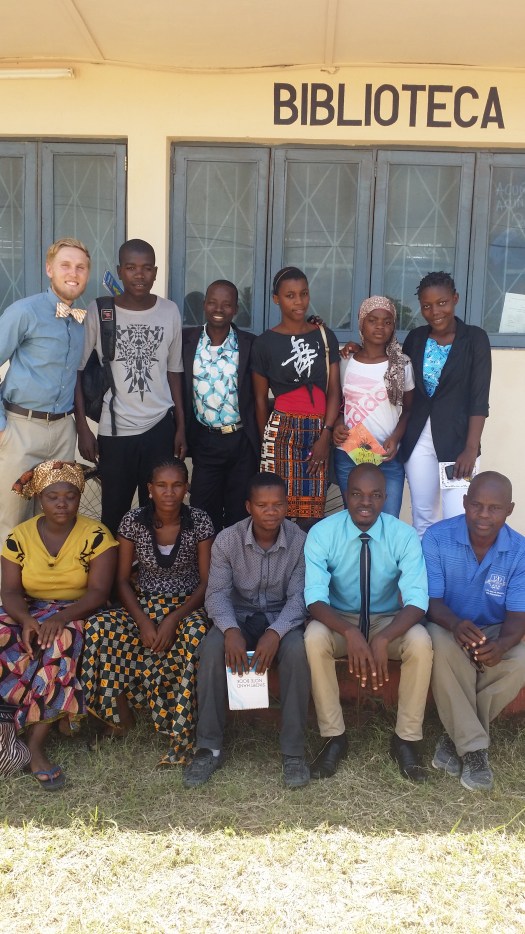
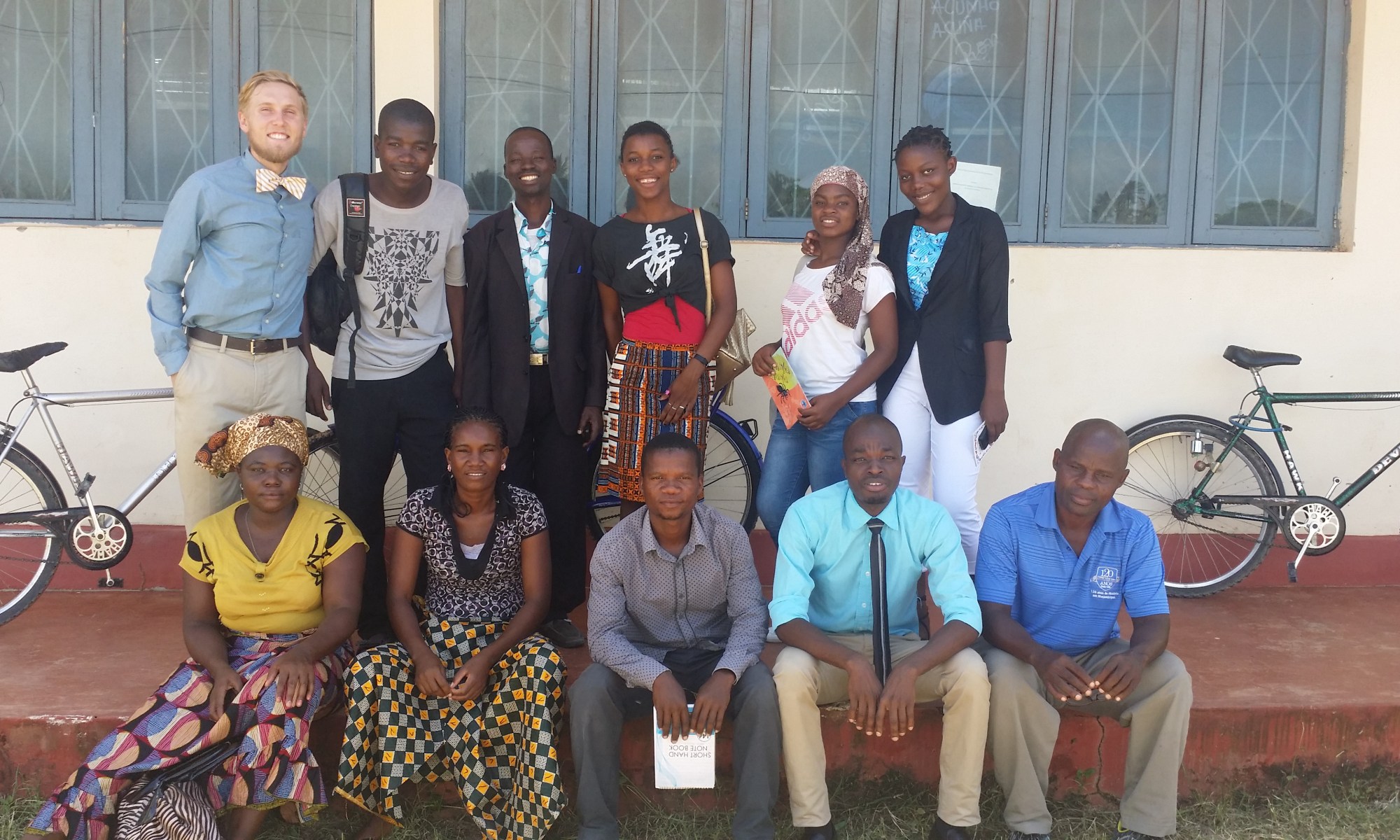
This is the entire new team minus 3 facilitators who didn’t have to present at the March training.
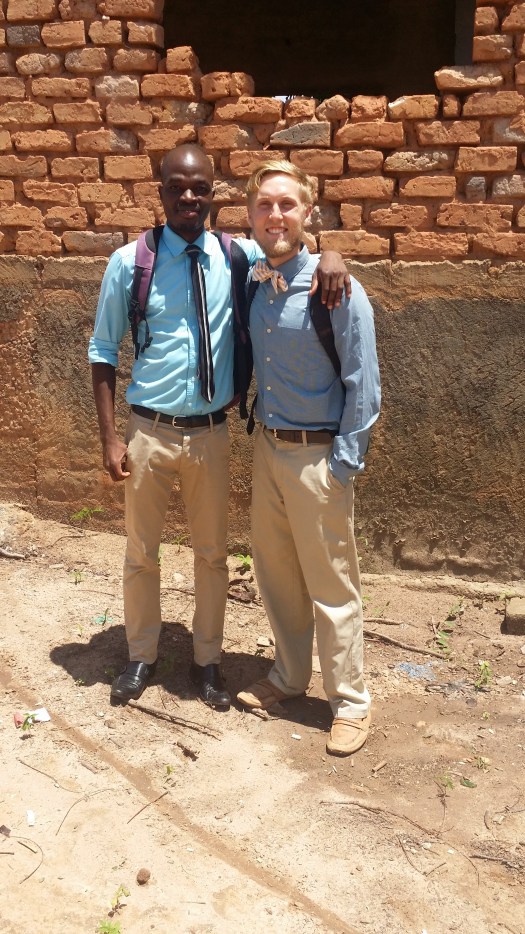
The man himself, Lasmim Pilecas.
 MOZ likely to sunburn